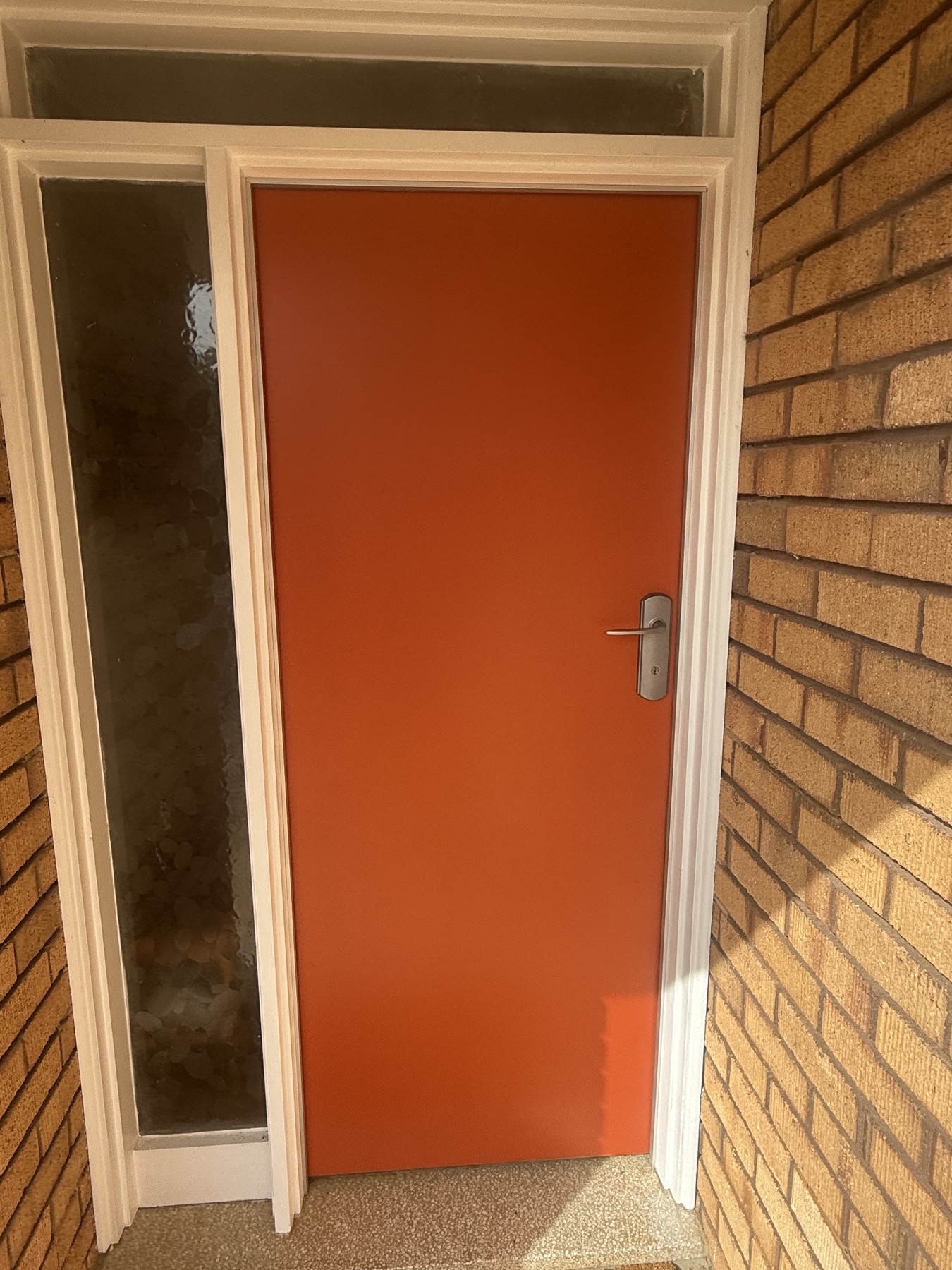
Can you match the paint colour in the rest of my house?
Usually very closely, and the match should come off the wall rather than off the tin or the old quote. Paint on a wall shifts over years with light and washing, so a fresh mix of the original colour code will often read as slightly different sitting next to it.
Most paint suppliers will scan a sample and mix to it. The reliable way to give them one is a small offcut: a piece of skirting, a cupboard door, or a section cut from an inconspicuous part of the wall itself.
The other honest option is to stop matching. Repainting the whole room, or carrying the new colour to a natural break like an internal corner or a door line, often looks better than a near-match the eye keeps finding.
When should the painter come in during a renovation?
After the plastering and the second fix, and before the flooring goes down where the program allows it. Painting before floors means nothing finished to mask and no cutting in over new timber, which is faster and gives a better line.
In practice the order is set by whoever else is running late. The useful thing you can do is tell the painter early when the plaster will actually be finished, rather than when it was meant to be.
Allow for a second short visit after the other trades are done, for touch-ups. Something always gets marked between the last coat and the handover.
Why does the new paint look different to the old, even in the same colour?
Three reasons, and they compound. The old paint has faded and yellowed, especially near windows. The new plaster is more absorbent than the old wall, so the same paint dries to a slightly different depth on it. And a fresh film carries a different sheen to one that has been cleaned for a decade.
This is why a sealer coat on new plaster matters even when the colour is identical. Without it the new section drinks the topcoat and reads flatter than the wall beside it.
If a difference still shows after the second coat, the fix is usually to carry the paint to a corner or a shadow line rather than keep adding coats to the patch.