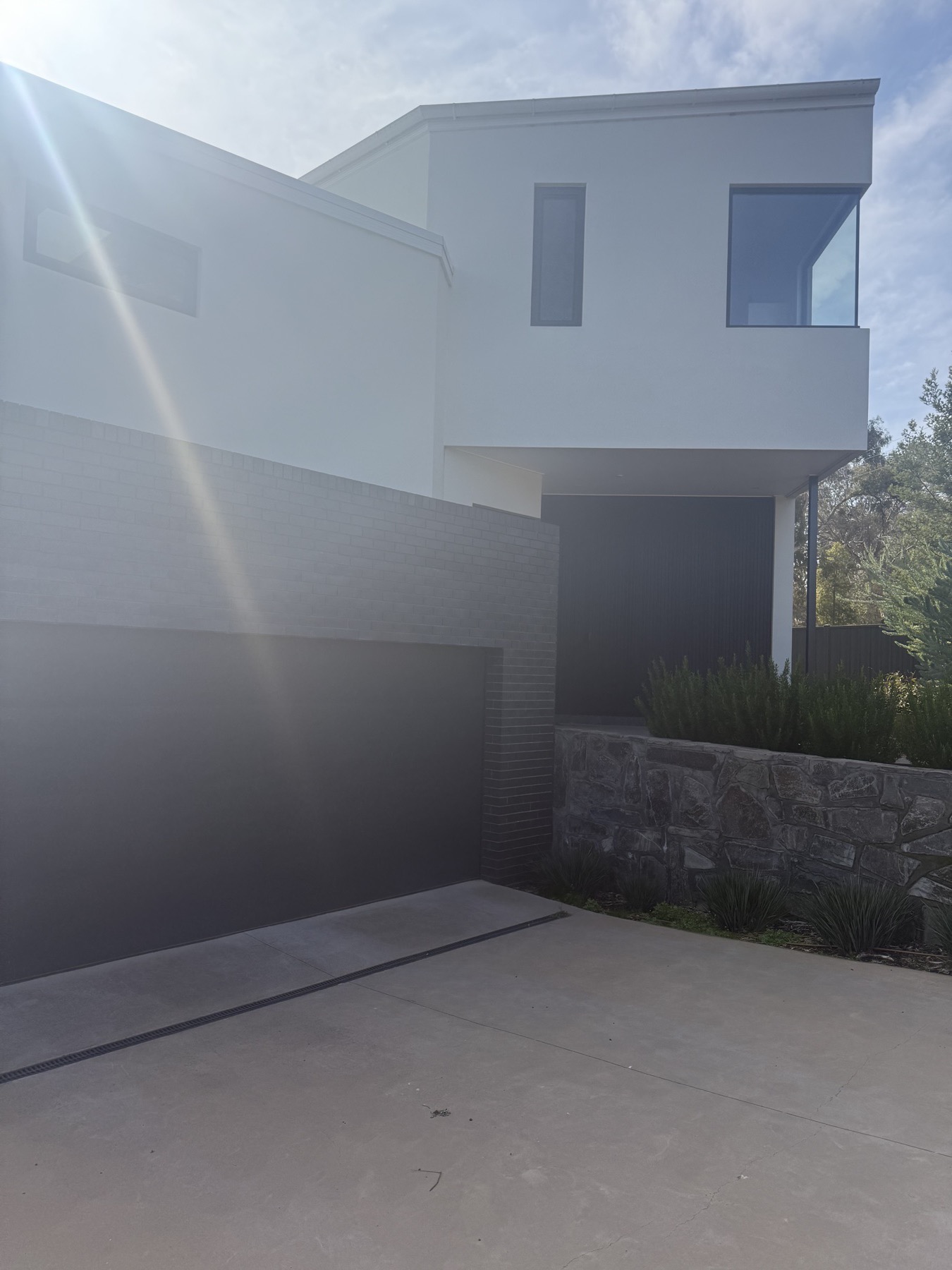
When does the painter come in on a new build?
After the plasterers and before the fit-off, in most builds. Wall and ceiling coats go on while the house is empty and there is nothing to mask or move, then trims, doors and touch-ups come back after the joinery, flooring and fittings are in.
That is two visits rather than one, and it is the sequence that produces a clean result. A single visit at the end means cutting in around finished floors, benchtops and hardware, which is slower and riskier for everyone.
The dates worth sending with an enquiry are plaster completion, fit-off start and handover. Those three fix the paint window, and if they slip we would rather know than find out on site.
What is the difference between builder standard and a premium paint finish?
Mostly the number of coats and the amount of preparation, not the brand in the tin. A builder-standard job is commonly one sealer and one or two topcoats applied briskly to a house nobody has lived in yet. A premium finish adds preparation between coats, more attention to trims and doors, and a result checked under raking light rather than a work lamp.
The honest part is that both look good on handover day. The difference shows up in the first year, at the joins, on high-traffic walls and around door edges, which is where a thin job goes first.
If you are comparing quotes, ask what is included per surface rather than which brand is used. The specification is where the money goes.
Who fixes paint defects after handover?
That depends on your contract with the builder rather than on the painter. Most new-build contracts carry a defect liability period during which the builder is responsible for making good and brings the trades back. Where the painting was contracted directly by the owner instead of through the builder, it returns to whoever did it.
Either way, log defects in writing at the walk-through, with photos and the date. Paint defects are easy to argue about later and easy to prove at the time.
Our own workmanship carries a five year warranty, which sits separately from anything the builder owes you.