The district
Early brick houses, then the hill suburbs.
Hughes, Curtin, Garran, Lyons and Chifley are the older end. A typical house there is brick veneer, single storey, timber windows, a low tile roof, and the original government joinery still under the paint. Pearce, Torrens and Mawson followed through the 1970s. Farrer and Isaacs are later. Isaacs climbs the hill and is often two storeys. O’Malley is the larger-block end of the district, and part of it was set aside as a diplomatic estate.
Part of Curtin was laid out on Radburn lines: the living side of the house faces a path and a park, and the car arrives at the back. That changes access. The walls to be painted are not always the walls you can drive a ladder to.
Hughes sits against Red Hill. Some of those houses were designed so the brick and the timber stayed visible. Painting over that is a decision, not the default. Phillip is the town centre: offices, the interchange, Westfield, and a lot of apartments. For us, Phillip means the houses on its edges.
Old enamel
Doors, architraves and skirtings in the 1960s houses were usually oil enamel. It has often been painted again with something that does not love it. Whether the next coat will hold is the question, and it is answered by looking, not by the colour card.
Timber, not the brick
On most of these exteriors the brick was never the thing that needed paint. Windows, fascias and barges were. Exterior repaints follow the surface that is actually failing.
Before a sale
Woden houses change hands steadily. The rooms that show up in the photographs are the ones worth doing, on a date that suits the campaign. Pre-sale painting is that scope, not a promise about the sale price.
Larger houses
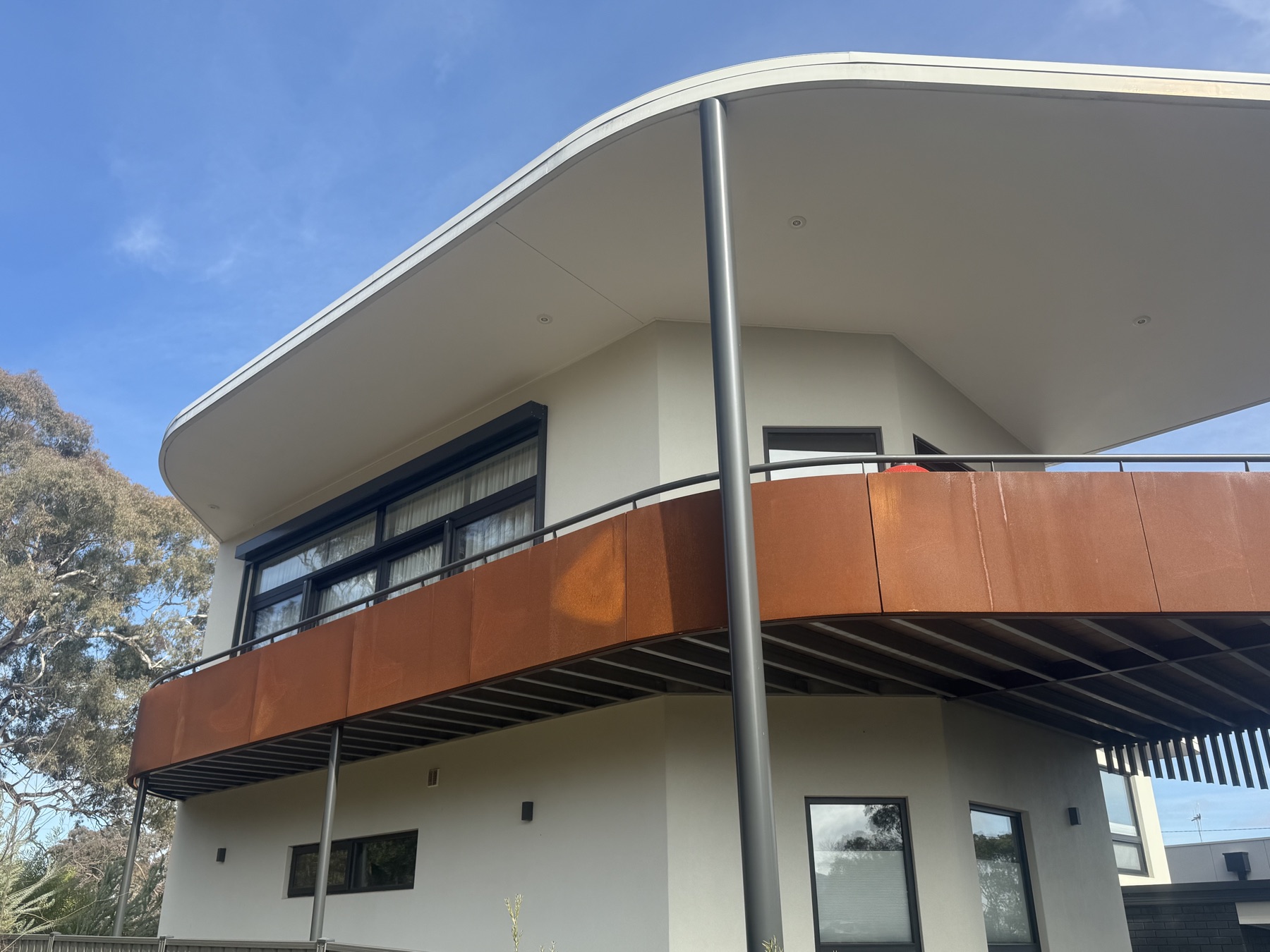
O’Malley and parts of Isaacs are simply bigger: more elevation, more trim, sometimes a steeper block. The work is still house painting. The quote is longer because the surfaces are.