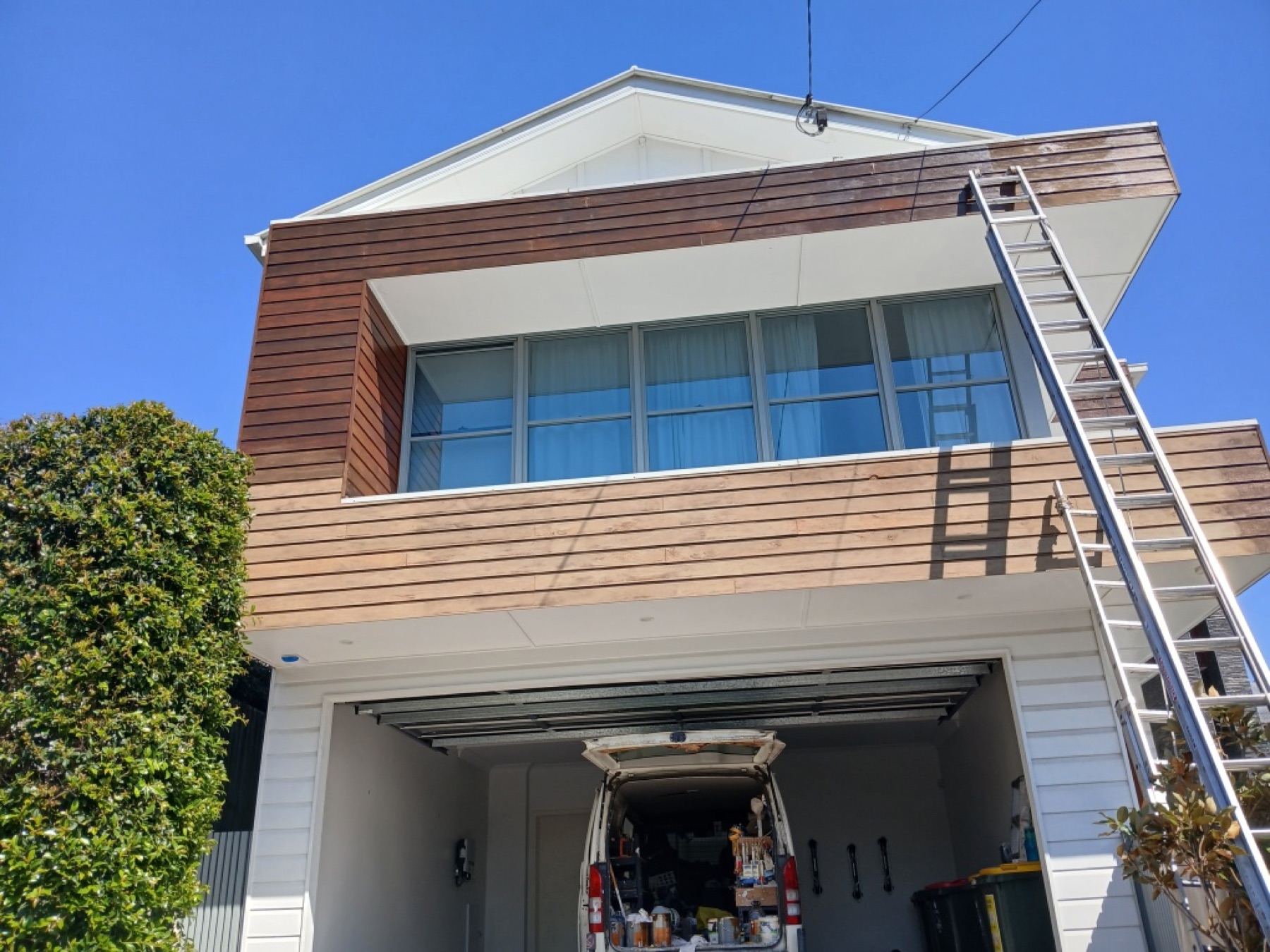
Two kinds of house
Brick and timber on one side of the street, a rebuild on the other.
The first Weston Creek houses are mostly single storey: brick veneer, a concrete tile roof, timber windows and timber fascias. The joinery was often finished in an oil enamel, and that enamel has usually been painted over more than once since. Gardens are established. The western walls take the afternoon sun, and the timber on that face usually shows it first.
The January 2003 fires destroyed many houses in Duffy and Chapman, and some in Holder and on the edges of neighbouring suburbs. The rebuilds are a later generation, often two storeys, rendered or face brick, with aluminium windows, put up through the mid-2000s. On some streets the two kinds of house sit side by side. They do not get the same preparation.
The district is eight suburbs: Weston, Chapman, Duffy, Holder, Rivett, Stirling, Waramanga and Fisher. Cooleman Court, in Weston, is the group centre. We paint the houses, not the shops.
Original timber
Windows, fascias, barges, eaves, doors and trims. If the timber is soft, paint will not fix it. That gets said at the inspection. If someone has already painted the brick, that is a different surface and it needs a look before anyone promises a finish.
The rebuilds
Closer to a modern exterior, or a straight interior refresh. Less enamel history. More render and plasterboard. The prep is about the coating that is there now, not about fifty years of coats.
Extensions
A common Weston Creek change is a new room on an old house. The new plaster has to meet the old walls without a line down the hallway. Extension painting is that match, not a separate colour scheme.
Inside the original house
Ceilings, walls, and architraves that have been built up with paint. Cutting in on that joinery is slower than cutting in on a new Molonglo house. Interior repaints start with what is already on the timber.